
 Marco Kohnsexpat-life7 min read
Overcome the Horizon of Possibilities of Your Environment
What you believe is possible is inherited from your environment. How I outgrew a village horizon: Realschule, a factory floor, then work nobody at home could show me.
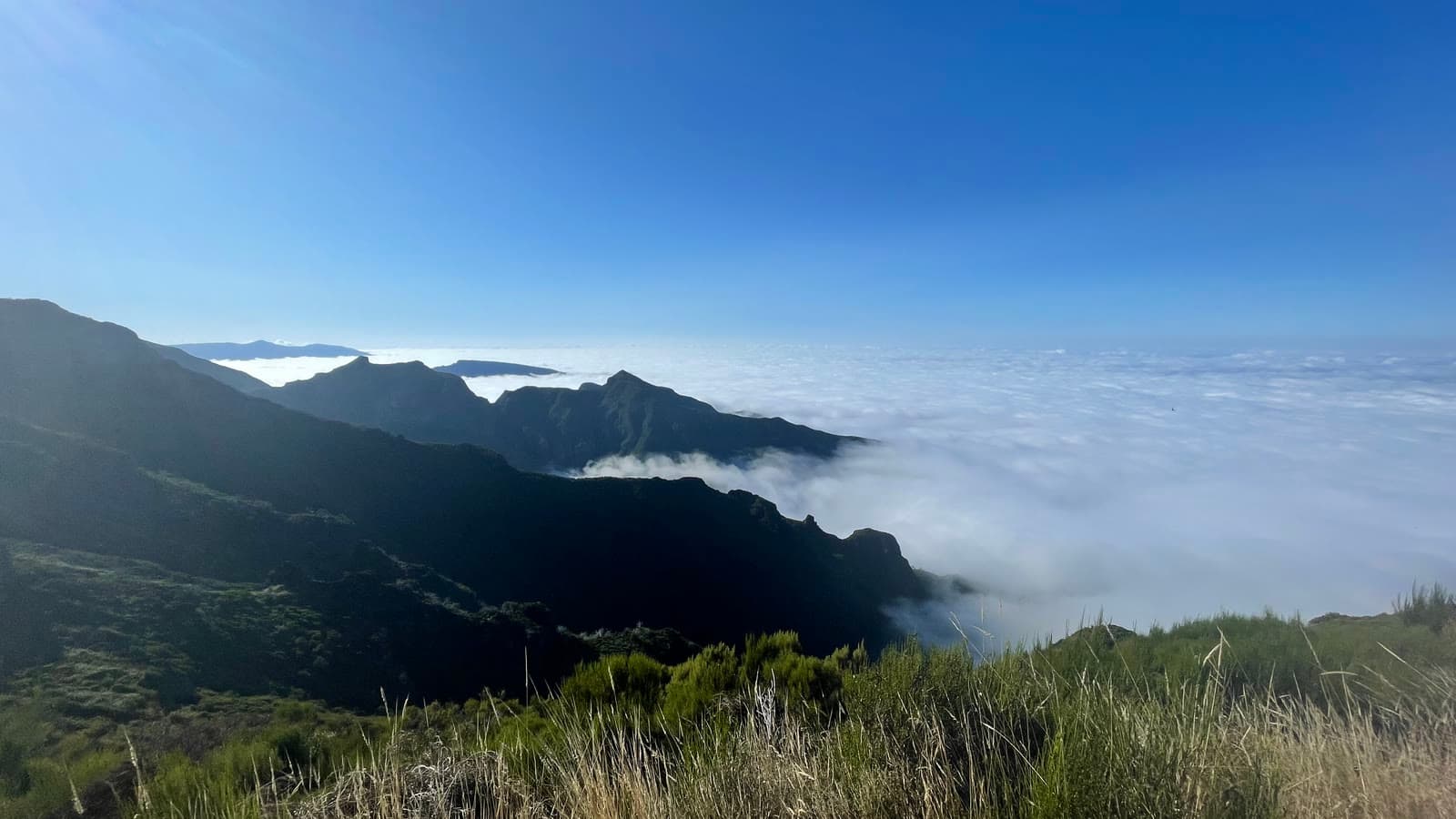
Some of my teachers told me, directly, that I would not make it to anything. I had not made it into Gymnasium, the top tier of the German school system, partly because I questioned rules instead of following them, and German schools do not reward that. Nobody around me considered me particularly intelligent, and a few adults felt the need to say so to a child.
Their words did the opposite of what words like that usually do. Being told I could not made me want it more. But I have met enough people since to know I got lucky with my reaction, because most children believe the adults, and that is the quiet mechanism this essay is about: your sense of what is possible is not yours. It is inherited from your environment, and until you notice that, you will spend your life reaching the edge of someone else's map and calling it ambition.
The doctor's son
Here is the cleanest way I can describe it. When the son of a doctor becomes a doctor, everyone around him applauds a high achievement, and it is one. But in a specific sense he never left his own world. The path was visible from his childhood kitchen table: the words, the confidence that university is for people like him, the living proof at breakfast every morning that it can be done. He did not overcome his horizon. He walked to the edge of a map someone else had already drawn.
There is nothing wrong with that path. The problem is subtler: most of us never find out whether our ambitions are ours, or just the highest point visible from where we happened to be born. The horizon feels like the end of the world. It is only the end of what you can currently see.
What my map looked like
My map was a village near Saarbrücken. My parents did not go to university, never lived abroad, and do not speak English. After Realschule I went into a technical apprenticeship and worked a year in the German automotive supply industry, where interns were told they were the lowest animal in the food chain and I was given pipes to clean with water and no degreaser, on purpose, to teach me how hard life is.
When I told coworkers on that factory floor that I wanted to become an engineer and go to university, they laughed. Not cruelly, I think. It was simply past the horizon of that room, and people defend their horizon, because taking it seriously would mean asking why they never crossed it.
At the end of that road sat a concrete offer: stay, and become an electrical worker at a normal German company. A solid, respectable life, and the highest point visible on the map I had been handed. I was one signature away from it. I declined, and even then I understood I was not declining a job. I was declining a horizon. What I took instead was a year abroad, paid for one shift at a time.
Nobody hands you the manual, and that is the gift
Here is what surprised me most about crossing it: the practical problems were never the barrier. I wanted to know how an international internship works, so I found out. I taught myself how to write an application in English, how to apply to a university, and how to weigh one job offer against another, because there was nobody in my environment who could tell me. Every one of those decisions was fully mine.
At the time this felt like a disadvantage, and I would have traded a lot for one adult who had done any of it before. In hindsight it was the most valuable part. When nobody around you can make your decisions, you learn that you are fully responsible for your life, and you learn it years before most people are forced to. I did not see my parents' missing degrees or missing English as a barrier, and I mean that concretely: it never once functioned as one. The barrier was only ever what I believed was normal for someone like me.
Borrow proof from people who have done it
The single fastest way I know to move a horizon is not motivation, and it is not information. It is proximity to a person who has demonstrably done the thing.
I noticed this pattern in myself while traveling: the words of people who had been further than me carried a weight that the same words from anyone else would not have carried, because they had proven, in front of me, that they lived what they said. One person casually describing something as doable moves your sense of possible more than a hundred articles saying the same, because your brain files it under "people like the ones I know do this" instead of under "things that happen to other people".
So the practical advice is unglamorous: get into rooms with people whose normal is your impossible. Multicultural people especially, because they carry horizons from environments you have never seen. You do not need them to mentor you. You need to eat lunch near them until their normal starts to leak into yours.

What sits on the other side
I want to be concrete about the payoff, because "expand your horizons" usually cashes out as a poster quote. These are things that, from my school days, looked impossible to me, and each one is now simply my life:
- Living abroad, for years, in more than one country
- Working in London
- Completing an international master's degree, taught in a language that is not my mother tongue, near the top of my cohort
- Speaking four languages, when the boy in that classroom barely trusted his English
- Building my own companies instead of asking permission to join someone else's
None of these required me to be the person my teachers were grading. They required me to stop trusting their map. If some of your goals feel impossible, it is worth checking whether they are impossible or just invisible from where you are standing, and what you would do if the question were open.
| Walking to the edge of an inherited map | Redrawing the map | |
|---|---|---|
| Where the path comes from | Visible from the childhood kitchen table | Nobody has walked it in front of you |
| What proof looks like | A parent doing the job at breakfast | Proximity to someone whose normal is your impossible |
| What applause means | A high achievement, correctly recognised | Often silence, because nobody nearby has a reference for it |
| The risk | Never finding out whether the ambition was yours | Mistaking invisible for impossible |
The weight of words, if you are the environment
One more thing, because this essay has a second reader: you are somebody's environment. If you teach, parent, or manage, your throwaway sentences are drawing the edges of someone's map right now. The words also outlast the environment: I have written separately about why achievements never switched that feeling off.
Every child has a genuinely distinct set of interests and abilities, and what they can become depends heavily on whether that gets talked out of them early. Telling a child they will not make it to anything is not harsh honesty. It is vandalism of a map that was still being drawn. I was lucky that it lit a fire in me instead of putting one out, and luck is a terrible system.
Redraw the map deliberately
Your horizon moves when you act on it, not when you think about it. What worked for me, stripped of any romance:
- Name the inherited ceiling. Write down what "making it" means in your environment, then ask whether you chose that definition or absorbed it. A few of the self-reflection questions for career crossroads are built for exactly this.
- Put one person who has done it inside your week. Proximity beats motivation, every time.
- Choose discomfort on purpose, in small doses. Declining the safe offer was the scariest decision of my early life and the cheapest in hindsight. Most horizon-crossings look like that from the other side: moving somewhere new, the harder degree, the application you feel unqualified for.
- Review it in writing. I have kept a weekly written reflection for more than five years, and one of its jobs is catching the moments when I start mistaking my current map for the territory.
The horizon of possibilities is solid in its effects and imaginary in its substance. Everyone who crossed one will tell you the same thing about the far side: there was no line there at all.