
 Marco Kohnsexpat-life6 min read
Dual Life: From the Village, Going Global
The honest cost of going global from a small village: missing family, guilt, friendships on a timer, and the open question of going back. How I carry it.
I grew up in a village next to a forest near Saarbrücken, close enough to France that a little of it rubbed off on us. My kindergarten friends and I played between the trees, and by any honest measure it was a privileged childhood, not because we had much, but because nothing was missing.
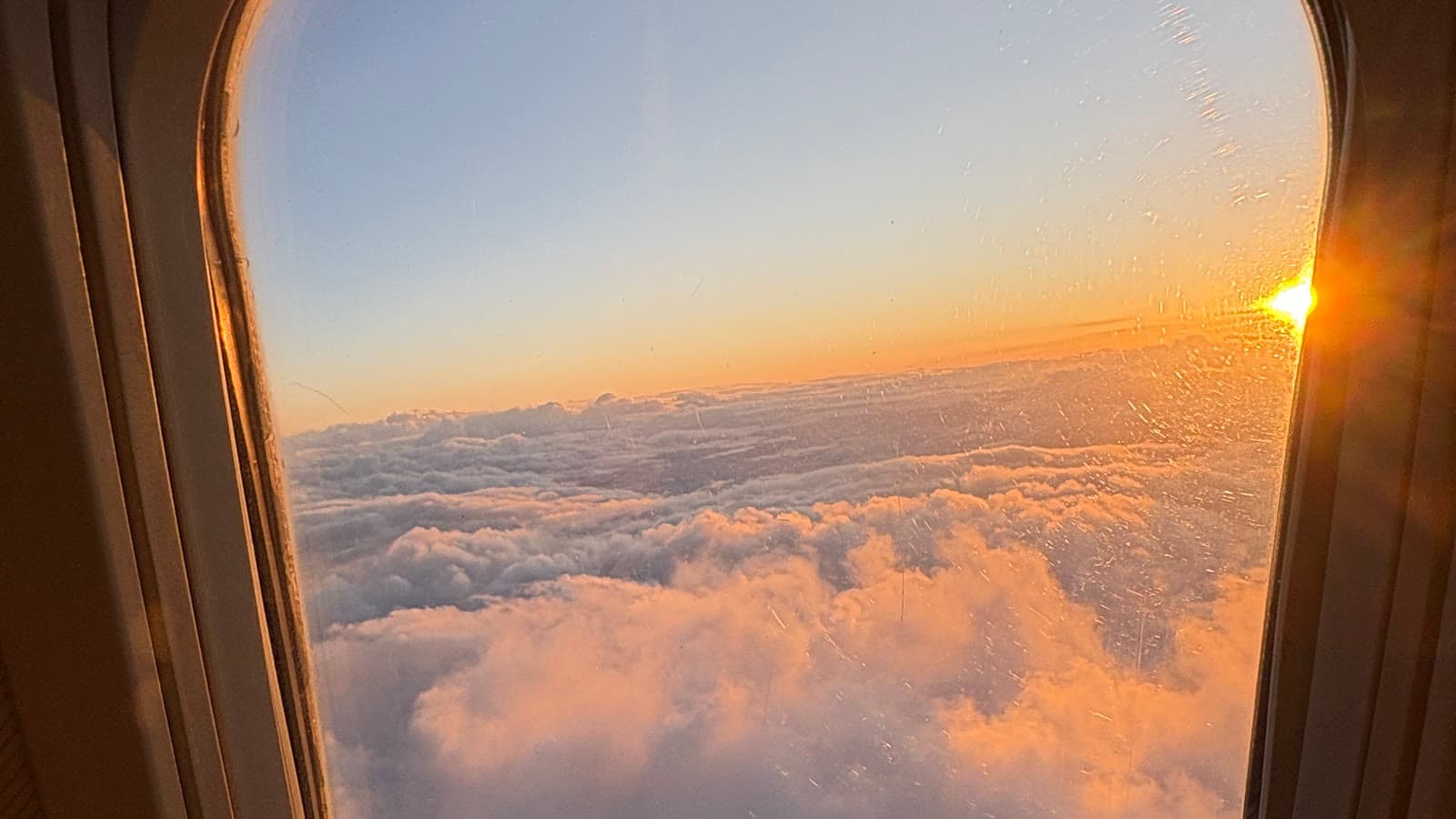
One image from those years has never left me. From the school, in my final years there, I would watch the sun set behind the village and think: right now, this same sun is rising somewhere else, on people and places I know nothing about. I wanted to know what I was not getting from that other part of the world. That thought eventually paid for a plane ticket to Bangkok at eighteen, the gap year that started all of it, and the plane ticket eventually built a life across Berlin, London, San Francisco, Barcelona, Milan, and Lisbon.
This essay is not about how to do that. It is about what it costs, because I looked for this article many times over the years and mostly found either emigration marketing or homesickness forums. The truth sits in between, and it does not resolve.
The boy and the bird
There are two characters in me and they have never signed a peace treaty. One is the inner boy who wants his home back: the village, the forest, family within walking distance, being known without explaining himself. The other is the bird, the one who wants to fly high, see everything, and live a life of no regrets.
Neither of them is wrong, and that is precisely the problem. The boy is not nostalgia; he is pointing at things every grandmother already knows are the substance of a good life. The bird is not vanity; he is the reason I am not still standing at that school window wondering. Every big decision of my adult life has been arbitration between the two, and each of them has won some rounds.
If you moved away from a small place, you have your own versions of both. The mistake is expecting one of them to eventually concede.
The ledger nobody shows you
Here is what the dual life has cost, concretely, in the years since I left.
Missing family, with guilt attached. Living abroad means my family's life happens without me in it: the birthdays I join by phone, the small emergencies I hear about after they are resolved. The feeling that follows is not just missing them. It is guilt, low-grade and constant, because unlike weather or visas, the distance is my choice, renewed every month I stay.
Friendships on a timer. The people you befriend abroad are, like you, people who leave. Everyone is writing their own story, and their next chapter is usually in another city. Some of the best friends I have made moved away within a couple of years, not because the friendship failed but because nothing was holding them, either. You learn to make friends fast, and you learn what it costs to keep doing it.
Depth is the hard currency. Building deep relationships abroad is slow work precisely when everything around you is fast. Friendship depth comes from repetition without agenda, from years of unremarkable Tuesdays, and a life of constant movement keeps resetting that clock.
Home stops being home, slowly. Returning to the village is wonderful and strange at once. The place is unchanged; my map of it is not. The horizon I grew up inside no longer fits, and you cannot un-see the world to make it fit again. Meanwhile my niche of work, and most of the people I share it with, simply do not exist there, so any permanent return means giving up things I spent a decade building. There is a version of me that finds that trade worth it. He gets outvoted, so far.
| What it costs | How it shows up |
|---|---|
| Missing family, with guilt attached | Birthdays joined by phone, emergencies heard about after they are resolved. The distance is a choice, renewed every month |
| Friendships on a timer | The people you meet abroad are also people who leave. You learn to make friends fast, and what it costs to keep doing it |
| Depth is the hard currency | Depth comes from years of unremarkable Tuesdays, and constant movement resets that clock |
| Home stops being home, slowly | The place is unchanged, your map of it is not. A permanent return means giving up what you spent a decade building |
"Am I ever going to go back home?"
This is the question underneath all of it, and I want to be honest about its status: it is open. Not open like a decision I am avoiding, open like a river I live beside. Some seasons it is loud, usually after a family visit; some seasons it is quiet for months.
What I refuse to do is close it dishonestly in either direction. Pretending I will definitely return keeps one foot out of my life here and makes the years abroad feel like an intermission. Pretending I will definitely never return would amputate the boy, and he has information the bird needs.
So the question stays open, and I manage it instead of answering it. The weekly written reflection I have kept for more than five years is where the managing happens: when the pull toward home shows up week after week, I treat it as a signal worth acting on, a visit, a longer stay, more calls. When it shows up once after a hard week, I let it pass. The archive keeps me honest about which one it was.
Carrying it, not solving it
Over the years I have collected a few rules for living the dual life without being torn in half by it. They are mine; take what fits.
- Name the trade you made, in writing. I chose width over depth of roots. Written down, the costs above stop being ambushes and become the known price of a chosen thing. If you are still ahead of that choice, read the wrong reasons to move abroad first; the right reason makes the price payable.
- Pay the boy his tax. Flights home, long unhurried visits, calls that are not status updates. The guilt shrinks in proportion to what I do, not what I feel.
- Invest in the two or three friendships that survived the moves. People who span both of your lives, who knew the village version of you and know the current one, are the rarest asset the dual life has. They compound; protect them.
- Let both characters vote, on schedule. Once a year I put the question on the table deliberately instead of letting it ambush me, and look at the whole board: place, work, people, the lot. Ambiguity is exhausting; scheduled ambiguity is manageable.
The dual life is not a problem I failed to solve. It is the shape of the life I chose: a village behind me that made me, a world in front of me that keeps remaking me, and one person responsible for keeping both loyalties alive. Most days, watching a different sun set over a different coastline, I would choose it again. And some evenings the light hits at a familiar angle, and for a second I am back at that school window, except now I am on the other side of it, and the boy asks his question, and I tell him the truth: I don't know yet. We are still flying.